The key to whole body health
Whole body health is actually controlled by the mind, but today we will cover the next best key: the gut
Background behind gut health
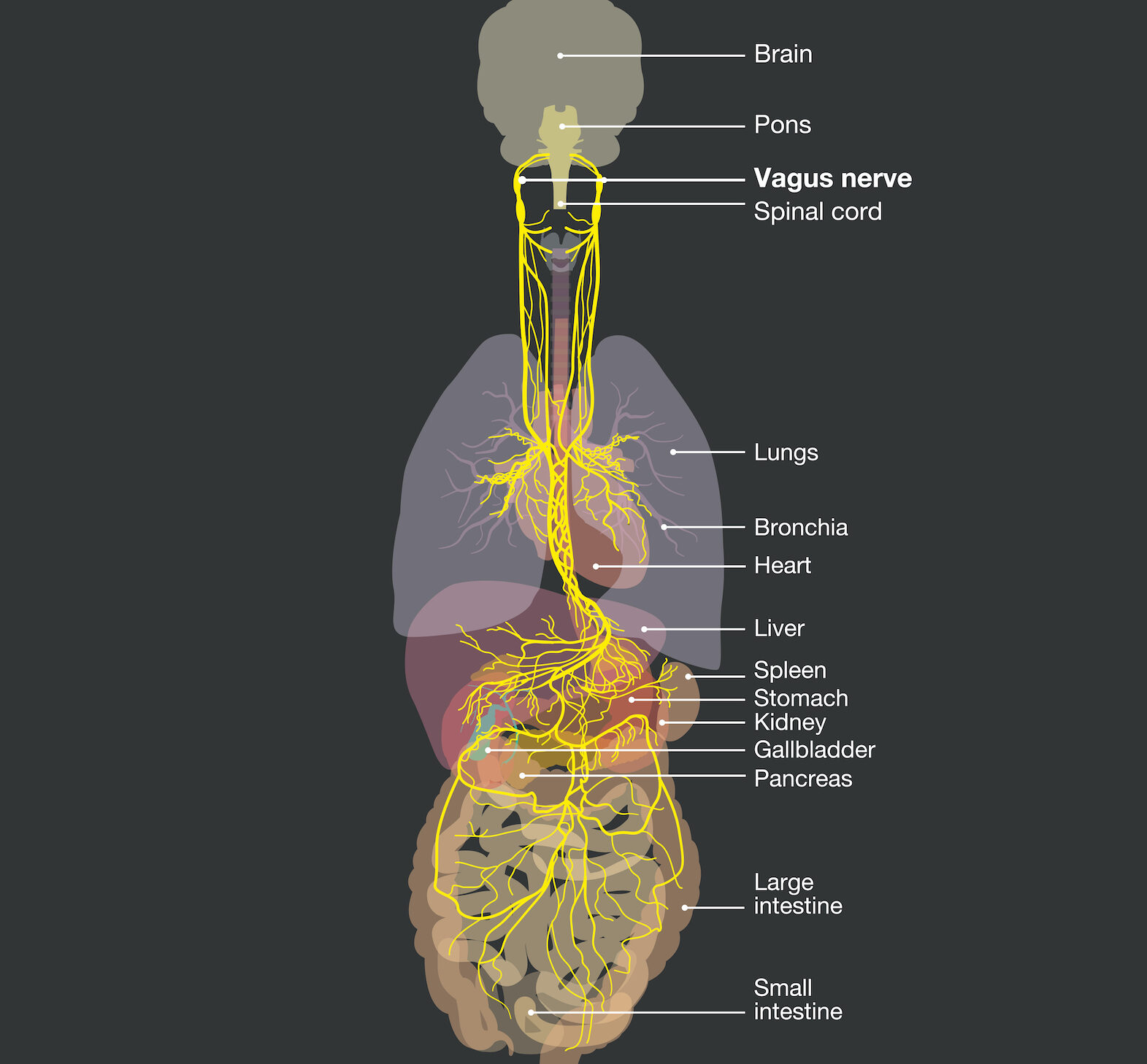
The gut, also called by some “the 2nd brain”, is connected to the brain by the largest neural network in the body called the vegas nerve. In the last decade gut experts have found that what happens in the gut affects the brain and entire body.
The gut biome is composed of beneficial bacteria we are born with, transferred by mother via breast milk, or obtained through food, these are often referred to as probiotic bacteria. A healthy gut biome may be in the area of 500-1000 species. What many people don’t know is that a simple anti-biotic treatment like amoxicillin could wipe out nearly all of those, and they don’t spontaneously return. In fact even just getting a short dose of probiotics probably will not permanently re-colonize the gut, some bacteria need months of repeated replenishment, and prebiotics (foods to grow probiotics).
Lets focus on just a few of the thousands of bacteria strains (you still need the others), and compare them.
The small intestine is where most of your nutrition gets absorbed by the body, then the remains are passed to the large intestine (aka colon), where they will get dumped out of the body. The large intestine will almost always have a number of bacteria that specialize in waste break down such as e. coli, there is a certain bacteria called L. Reuteri that has a number of jobs, but it’s main job is to kill bad bacteria, when this bacteria is not present, then e. coli and others can travel back up stream in to the small intestine to your nutrition source and “foul the waters”. That process may have many names depending on the symptoms, but is generally referred to as “leaky gut”, which today it is estimated half of Americans are experiencing some sort of imbalance of gut bacteria. See this good interview with Dr. Berg and Dr. William Davis.
An unhealthy gut has been identified as a source of whole body inflammation, depression, poor immune strength, cancers, Parkinson’s and more (reference Dr Will Bulsiewicz).
What can be done??
Restore as many bacteria as you can. Probiotic supplements can help, but commercially available supplements are very limited in counts and strains, basically a joke of a solution, while natural probiotic sources in foods are vastly superior and less expensive. Probiotic bacteria can be exponentially multiplied when cultured in dairy (yogurt) or juice, to 10x more than what any pill offers. See chart to compare CFU counts in commercial products vs making your own yogurt:
Gut microbiome · probiotic dosing
How much bacteria is actually in that spoonful?
Colony-forming units (CFU) per typical serving, commercial probiotics vs. a home multi-strain yogurt.
* The homemade multi-strain figure isn't an independent lab measurement — it's a single home flow-cytometry count reported by Dr. William Davis for his 36-hour L. reuteri ferment, and it isn't clear whether it reflects the whole batch or one serving. Treat it as an order-of-magnitude anecdote, not a verified dose.
Commercial CFU counts are manufacturer label claims at time of manufacture, not guaranteed counts at the point of consumption.
Seed DS-01 reports potency in AFU rather than CFU — shown here for scale, not as a like-for-like count.
That chart does not mention one thing, some bacteria strains require 100 billion CFU per day to be affective, while some of the commercial supplements that advertise “100 billion CFU”, have that count divided by the several strains in their formula, lowering the potency of any single one significantly.
Probiotic Bacteria Strain Info and Benefits
Lets cover a few important probiotic bacteria strains and what they do:
Gut microbiome · strain comparison
What each probiotic strain is actually good for
Five well-studied strains and every benefit reported for them across the sources checked, most-supported first. Tap a strain name for the full write-up.
Lactobacillus reuteri · strains ATCC PTA 6475 / DSM 17938 (BioGaia Gastrus)
Gut repair, weight loss, anti-inflammatory, mood & recovery- Suppresses H. pylori, which allows ulcers to heal, key treatment for IBS, SIBO, and other issues.
- Stimulates oxytocin release via the vagus nerve, regulating cortisol — linked to empathy, social bonding, libido, and reduced social anxiety, clearer mental state
- Reduces inflammation by shifting wound-healing cells from neutrophils to lymphocytes
- Increases dermal collagen and skin thickness — smoother skin, fewer wrinkles, faster wound healing
Click to see +20 more benefits
- Regulates and lowers cortisol using several mechanisms, which is responsible for inflammation, visceral fat storage, anxiety, lack of mental clarity
- Lowers LDL cholesterol by over 11% and raises circulating vitamin D by ~25% in trials
- Helps balance serotonin production in the gut = less GI-driven mood volatility
- May improve brain serotonin turnover indirectly by reducing inflammation and supporting tryptophan availability
- Better serotonin regulation = smoother mood transitions and less emotional reactivity
- Improved dopamine regulation noted in animal studies = better motivation
- Reduced oxidative stress that normally depletes dopamine stores
- Oxytocin and dopamine shifts can alter the AMPA/NMDA receptor ratio in the brain = improved social recognition and conversational adaptability, improved reading of body language and social cues
- Some strains can produce GABA — the brain’s main inhibitory neurotransmitter = Lower background anxiety, Improved sleep onset, Better ability to stay calm under pressure
- Preserves or increases bone density (animal studies)
- Appetite suppression and easier fasting
- Increases testosterone and restores youthful muscle mass/strength in men
- Reverses immunosenescence — age-related decline of the immune system
- Improves sleep quality; anecdotal reports of more vivid dreams
- Adjuvant to H. pylori eradication therapy — some strains coaggregate with H. pylori and block its adhesion to the stomach lining
- Suppresses C. difficile and protects against pathogenic E. coli, Salmonella, and Shigella
- May help prevent and treat SIBO, and reduce SIBO recurrence, via bacteriocin production
- Reduces infantile colic and acid reflux (strain DSM 17938) — though evidence is mixed; a meta-analysis flagged bias and a follow-up trial found no benefit
- Reduces dental cavities risk (strains DSM 17938, ATCC PTA 5289)
- Preliminary/anecdotal: protection against gastric cancer, less painful menstrual cycles
Effects are strain-specific — tied mainly to BioGaia’s ATCC PTA 6475 / DSM 17938. Other L. reuteri strains (including many in commercial yogurt/kefir) may not replicate them, and some are even pro-inflammatory. Sources: Dr. William Davis, Hansa Mato Substack, PubMed/Examine.
Lactobacillus gasseri
Waist & visceral fat- Reduces waist circumference (2–5 cm) and abdominal visceral fat in human RCTs over 12 weeks
- Eases menopausal hot flashes and improves psychological well-being
- Reduces IBS symptoms and functional dyspepsia (post-meal heartburn)
- Supports vaginal health — lowers vaginal pH and inhibits bacterial-vaginosis pathogens as an oral adjuvant therapy
Click to see +8 more benefits
- Proposed mechanism for fat loss: lowers LPS endotoxemia via upper-GI colonization and bacteriocin production
- Reduces perceived stress
- Helps address SIBO; bacteriocins target E. coli, Klebsiella, and Staphylococcus
- Reduces total cholesterol, LDL, and triglycerides (combined with inulin in one trial)
- Preliminary evidence: may lower uric acid and oxalate levels
- Preliminary evidence: may improve cognitive function
- Preliminary evidence: suppresses Candida albicans overgrowth
- Compatible to culture directly with L. Reuteri
Visceral-fat and waist effects are dose-dependent — the strongest results used ~10 billion CFU/day. Cognitive, uric-acid, and Candida effects are preliminary. Sources: Dr. William Davis, PubMed/PMC clinical trials.
Bacillus subtilis · strains HU58 / DE111 / BS50
Gut defense- Potent bacteriocin producer — broad-spectrum activity against E. coli, Salmonella, Staph aureus, Enterococcus, and Candida albicans
- Stops spore-forming and biofilm-building — survives stomach acid, extends GI residence, and shields other probiotic strains
- Reduces bloating, gas, abdominal discomfort, constipation, and diarrhea (randomized, placebo-controlled trials)
- Lowers total and non-HDL cholesterol (DE111, 4-week RCT)
Click to see +8 more benefits
- Helps eradicate SIBO, normalizing breath hydrogen gas levels
- Breaks down pathogen biofilms via surfactant production
- Immunomodulatory effects studied in healthy adults (DE111, strain-specific)
- Produces B vitamins (B2, B7, B9, B12) and vitamin K2 (menaquinone-7)
- Natto-fermenting strains produce nattokinase, a fibrinolytic enzyme studied for healthy blood clotting
- Animal studies suggest reduced intestinal absorption of the toxic heavy metals cadmium and arsenic
- Acts as a foundational species that supports proliferation of other beneficial gut microbes
- Best consumed with L. Reuteri and L. Gasseri, but cannot be cultured with them (Dr. Davis protocol)
Most clinical evidence is strain-specific to DE111 or BS50; biofilm-disruption and heavy-metal findings are largely from animal/in-vitro studies. A common source for home fermentation. Sources: Dr. William Davis, PMC/Frontiers clinical trials.
Saccharomyces boulardii · strain CNCM I-745, sold as Florastor
Antibiotic-safe- A probiotic yeast, not a bacterium — unaffected by antibiotics, so it can be taken alongside them
- Adjunct therapy for H. pylori and C. difficile infections, improving eradication and reducing recurrence
- Leaky gut aide: Strengthens the gut barrier — increases tight-junction proteins (occludin, ZO-1) and lowers intestinal permeability
- Pilot studies suggest reduced Crohn’s disease relapse (750–1000 mg/day for up to 6 months)
Click to see +6 more benefits
- Reduces IBS symptoms — abdominal pain, flatulence, diarrhea, and gurgling
- Strong meta-analysis evidence for preventing antibiotic-associated and traveler’s diarrhea
- Lowers pro-inflammatory cytokines TNF-α, IL-1β, and IL-6
- Investigated for ulcerative colitis — heat-killed form shown to restore gut barrier and microbiota balance
- Studied (with mixed/limited evidence) for giardiasis, HIV-related diarrhea, and acute pediatric diarrhea
- Can be consumed in cultured dairy, but tastes great in unsweetened cherry juice, or pomogranite juice, this allows exponential amplification of CFU count
Avoid during active Crohn’s disease flares — some studies found it raised ASCA antibody levels. It’s a transient colonizer, clearing from the gut within 3–5 days of stopping, so it needs regular dosing. Sources: PubMed, PMC meta-analyses.
Lacticaseibacillus paracasei Shirota · formerly classified as L. casei Shirota (sold as Yakult)
Immune & regularity- Supports NK (natural killer) cell activity and modulates T-cell and B-cell immune response
- Reduces the incidence and duration of upper respiratory tract infections — shown in office workers, elderly nursing-home residents, and athletes
- Lowers stress-related salivary cortisol and eases exam-stress symptoms in human trials
- Improves bowel regularity and relieves constipation
Click to see +5 more benefits
- Survives stomach acid to reach the intestine alive; lowers gut pH via lactic/acetic acid to inhibit pathogens
- Improves influenza vaccination immune response in elderly adults (RCT)
- Anti-inflammatory in animal colitis models — inhibits NF-κB signaling
- Preliminary: improves mood disturbances in the elderly and reduces anxiety in chronic fatigue syndrome patients
- Easily cultured in dairy, just add a bottle of Yakult to 1qt of half-n-half, not compatible to culture with other strains, see instructions for more info
Most supporting research is funded by Yakult, the strain’s commercial owner — a real conflict of interest to weigh, though several trials were independently peer-reviewed. Sources: PubMed, Yakult research, Dr. William Davis.
Where can I buy this stuff?
Check out our products pages to get a few Amazon links to get you started fast.
How do I put it all together?
Check out our how to guide articles on how to make your probiotic yogurt or drink.
Latest articles
- How to make Probiotic Yogurt
A few guides on making probiotic yogurt
- L. Reuteri vs Other Probiotic Strains
How Lactobacillus reuteri compares to L. acidophilus, L. plantarum, and other common probiotic strains, and why it stands out for home fermentation.